
Government Crisis Communication: How to Protect Public Trust Under Fire

The difference between managing crisis communication and being buried by one comes down to how fast, how clearly, and how honestly they speak. You’ve seen it happen before. A government agency faces a scandal, a public disaster, or an unexpected controversy, and within hours, the story is everywhere. The agency’s response? Slow, vague, and contradictory. That’s when crisis communication stops being a PR function and becomes a survival strategy. Why Crisis Communication Is the Backbone of Government Trust Public trust in government is fragile in a way that most agency leaders underestimate. According to the Partnership for Public Service, only 33% of Americans said they trusted the federal government in 2025. Just one year earlier, that number was 23%. Trust had fallen from 35% in 2022, an 18-point collapse in three years. Additionally, the OECD’s 2024 Trust in Public Institutions Survey found that only 39% of citizens across 30 countries believed their government communicated adequately about policy and reform decisions. That gap, between what governments do and what citizens understand, is precisely where crises take root. Crisis communication, therefore, is not just about controlling a bad news cycle. It’s about closing that trust gap before it becomes a credibility chasm. What the Data Says About Government Crisis Communication Most government agencies don’t fail because of the crisis itself. They fail because of how they respond to it. Poor coordination was cited as a major failing in FEMA’s own after-action report following Hurricane Sandy. Years later, Hurricane Katrina became a case study in what happens when crisis response systems exist on paper but not in practice. Consequently, the damage to public trust wasn’t just emotional; it was measurable and long-lasting. Research published in the Journal of Contingencies and Crisis Management confirms it: citizen satisfaction with government crisis communication is a direct predictor of institutional trust. When people feel informed and heard during a crisis, trust recovers. When they don’t, it collapses, sometimes permanently. This is the core challenge every government communicator must face. Crisis communication isn’t just about managing perception. It’s about maintaining the social contract between an institution and the people it serves. The 4 Most Common Government Crisis Communication Failures Before you can fix crisis communication, you need to understand where it breaks down. Here are the four patterns that consistently damage government credibility under pressure: 1. Delayed response: In a fast-moving information environment, silence reads as guilt. Every hour a government agency waits to respond is an hour the narrative belongs to someone else, usually a critic, a journalist, or social media. 2. Contradictory messaging across departments: When two agencies say different things about the same event, the public doesn’t split the difference. They assume both are wrong. Unified messaging is not optional during a crisis; it’s the foundation of credibility. 3. Jargon-heavy, bureaucratic statements: Citizens under stress need plain language. If your crisis statement sounds like a legal brief, it will be dismissed or, worse, misread. Clarity is not a luxury during a crisis, it’s the entire point. 4. Failing to acknowledge impact: Government agencies often avoid admitting fault for legal reasons. However, there’s a critical difference between accountability and culpability. Acknowledging public impact, expressing concern, and committing to action can preserve trust even when fault is disputed. The 5-Step Crisis Communication Framework for Government Agencies Getting crisis communication right is not about instinct. It’s about having a framework ready before the crisis arrives. Here’s what works: 1. Activate your crisis communications team immediately: The first 60 minutes of a government crisis are the most important. You need a designated team with clear roles, a lead spokesperson, a legal adviser, a media coordinator, and a digital monitoring specialist. 2. Establish a single source of truth: All public-facing information must come from one centrally managed channel. This prevents conflicting statements and ensures message consistency across media, social platforms, and official briefings. 3. Acknowledge before you explain: Before you share facts, timelines, or investigations, acknowledge the situation. Tell the public you are aware, you are acting, and you are taking it seriously. This simple step buys time and preserves goodwill. 4. Communicate often, even when you have little new to say: Regular updates, even brief ones, signal control and transparency. “We are still gathering information and will update you within two hours” is a complete, trust-building statement. 5. Define your recovery narrative early. Crisis communication is not just about managing the moment. It’s about controlling the story that comes after. Begin building your recovery narrative- what you learned, what you changed, what you’re doing differently- within days of the crisis, not months. How Government Crisis PR Differs From Corporate Crisis PR This is a distinction worth understanding clearly. Corporate crisis communication answers to shareholders and customers. Government crisis communication answers to everyone: citizens, oversight bodies, legislative partners, media, and future generations. Furthermore, government agencies operate in an environment where legal restrictions, freedom of information laws, and political scrutiny create layers of constraint that corporate communicators rarely face. This is why generic crisis PR playbooks consistently fail government institutions. The stakes are different. The audiences are broader. And the consequences of a misstep are not measured in stock price, they’re measured in public safety and democratic trust. Effective government crisis PR requires: Public Trust Restoration: What Happens After the Crisis Many agencies believe the crisis ends when the news cycle moves on. It doesn’t. The recovery phase, when public trust restoration actually happens, can last months or years. Research consistently shows that how an agency behaves after a crisis determines whether trust returns or stays broken. Accordingly, agencies that invest in post-crisis transparency, proactive updates, and visible policy changes rebuild credibility faster than those that go quiet and hope the public forgets. The goal of post-crisis communication is not to make people forget what happened. It’s to make them believe, based on real evidence, that it won’t happen again When to Bring In a Strategic Communications Partner Not every crisis can be managed with internal resources. In fact, many
Public Relations: 7 Smart Strategies to Build Powerful Trust
In this climate, public relations strategies are no longer a nice-to-have. They are how brands stay credible, stay relevant, and stay in business. Audiences do not trust brands; they check them. Every message is questioned. Claims are tested. Every silence is read as a signal. Smart brands use PR to shape how people see them, manage difficult situations, and build real relationships with the people who matter most. What Is Public Relations? A Clear Definition PR goes far beyond press releases. It is the practice of managing how your brand is perceived, building strong relationships with stakeholders, and earning credibility through honest and consistent communication. PR and advertising work differently. Advertising puts out paid messages. Public relations, on the other hand, earns trust over time through authentic action and real stories. PR and marketing also serve different roles. Marketing creates demand. However, public relations shapes the environment in which that demand either grows or falls apart. Without trust, even the best marketing campaigns do not convert. Studies consistently show that earned media is seen as far more trustworthy than paid advertising. That gap in credibility is exactly where public relations does its best work. According to the Edelman Trust Barometer, trust is now one of the top factors consumers use when deciding which brands to buy from, recommend, or defend publicly. That makes public relations not just a communications tool; it makes it a direct driver of business growth. Visibility without credibility is reputational risk. The 7 Smart Public Relations Strategies That Build Trust Narrative Control: Define the Story First Silence creates risk. Therefore, smart brands take control of their story before someone else does. When a brand stays quiet, others fill the gap. Rumors spread. Competitors frame the story. Journalists speculate. That silence becomes expensive very quickly. Framing is not the same as spinning. Framing means presenting facts clearly and in the right order. Spinning means twisting the truth. Good PR professionals know the difference, and they build messaging that holds up under pressure. The order in which you share information matters too. For this reason, smart PR teams plan this sequence carefully so that audiences receive the right message at the right time. Reputation Infrastructure: Build Systems, Not Campaigns Campaigns give you a short spike in attention. However, systems build lasting influence. The strongest brands do not rely on individual campaigns to protect their reputation. Instead, they build what some experts call a “reputation moat”, a layer of credibility that holds firm even when things go wrong. This means aligning the way a CEO speaks publicly, how the brand appears online, how it handles media, and how it talks to investors, all at the same time. As a result, authority becomes something the brand owns permanently, not something it borrows for a season. Crisis Communication: Speed With Structure The first sixty minutes of a crisis shape the next six months of your reputation. Therefore, smart brands prepare their crisis response long before a crisis ever happens. Slow responses signal that you do not care. Defensive responses make things worse. However, a clear, honest statement delivered quickly, even if you do not have all the answers yet, builds confidence and keeps audiences on your side. PR firms help leadership teams prepare for difficult situations in advance. They run practice scenarios, sharpen key messages, and make sure that when something goes wrong, the response is calm and structured. Case Study: Crisis Communication in Action A mid-sized fintech company faced sudden regulatory scrutiny after a data error affected thousands of customers. Media inquiries came in within hours. The PR team activated a pre-built crisis plan. The CEO released a transparent statement within 45 minutes. It acknowledged the error, explained what steps were being taken, and committed to an independent audit. Negative coverage peaked within 24 hours and then dropped sharply. Customer churn was well below what similar companies experienced in comparable situations. Regulators noted the company’s openness as a positive factor. Preparation is the crisis strategy. Brands that rehearse their response own the story. Brands that guess their way through it get defined by the incident. Thought Leadership: Earn Authority Through Insight Thought leadership builds the kind of authority that no advertising budget can create. Additionally, it places your leaders at the center of the conversations that matter most in your industry. Publishing real research, honest commentary, and useful analysis builds substance. Audiences recognize shallow content quickly. Therefore, thought leadership only works when the ideas are genuinely valuable, not just visible. PR specialists help executives find their unique point of view, develop articles and keynote talks, and identify the right media platforms to reach the right people. Case Study: From Unknown to Industry Voice The CEO of a healthcare tech company had great ideas but lacked a personal brand. She was operating in a crowded space with many well-funded competitors and large PR teams. Realizing this, a Public relations agency discovered her key insight: that the actual problem with patient care was not that innovation was lacking but that systems did not communicate with each other. The Public relations agency wrote a research-based article, secured publication in a leading industry magazine, and arranged for her to speak at a leading industry conference as a keynote speaker. Within six months, her company was earning name-checks across leading industry and business publications. Additionally, the volume of partnership opportunities had increased significantly. In fact, the company began receiving nominations for industry awards it had never previously been considered for. A genuine idea, published in the right outlet, gives authority that cannot be bought Media Relations: Earn Coverage That Matters Earned media gives your brand something paid media never can, third-party credibility. When a trusted publication writes about your brand, that carries far more weight than anything you say about yourself. Smart brands do not chase every media opportunity. Instead, they focus on the publications and platforms that their key audiences actually read and trust. Good PR professionals build real relationships with journalists over
High-Stakes Media Interview Preparation: Complete Executive Guide
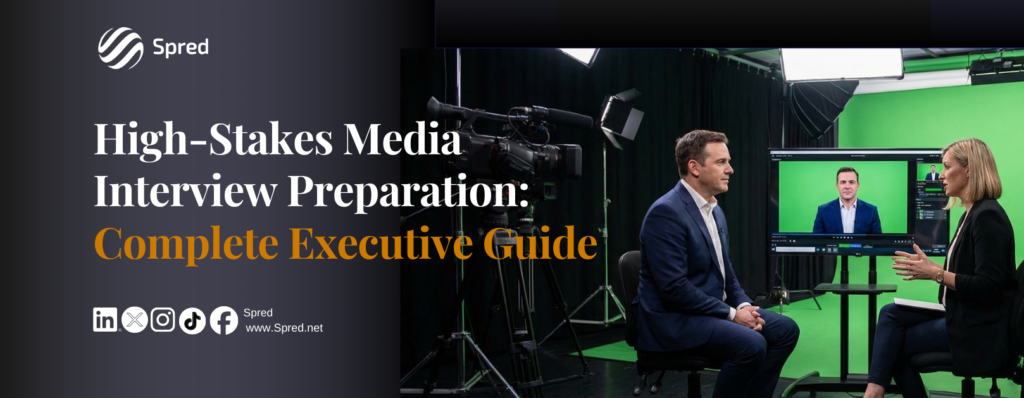
Media interview preparation is a key factor that separates executives who build authority from those who create reputation crises. Every interview carries risks that unprepared leaders underestimate significantly. A single misstatement can go viral within minutes and poor responses damage credibility permanently. Therefore, systematic preparation becomes essential for high-profile executives facing journalist questions. Elite PR agencies understand these stakes deeply. They provide comprehensive training protecting sensitive reputations. Consequently, professional media interview preparation delivers measurable protection for for executive brands and government agencies. However, most executives approach media interview preparation casually without structured frameworks guiding their practice. They assume natural communication skills transfer to media settings, underestimate journalist tactics eliciting controversial statements and skip rehearsal thinking preparation looks inauthentic. This overconfidence creates vulnerability during actual interviews. Meanwhile, competitors with disciplined preparation secure positive coverage consistently. This guide reveals how successful media interview preparation programs operate across industries and situations. Furthermore, it demonstrates proven tactics that elite agencies employ for high-profile clients. The stakes remain enormous for organizational reputation. Media interviews shape stakeholder perceptions. Strong performances build trust while weak responses destroy credibility. Additionally, effective media interview preparation requires understanding different interview formats and journalist motivations. Print interviews allow message refinement through follow-up. Broadcast segments demand concise soundbites. Why Media Interview Preparation Protects Reputation Learning why media interview preparation matters begins with recognizing how quickly unprepared executives damage reputations. Social media amplifies mistakes within minutes of interviews airing. Controversial statements generate negative coverage across publications. Stakeholders form lasting impressions based on single performances. Consequently, media interview preparation becomes risk management rather than optional enhancement for leaders. Research from communication experts shows unprepared executives make predictable mistakes under pressure and provide overly long answers losing audience attention. For example, BP’s CEO, Tony Hayward destroyed credibility during the Deepwater Horizon crisis through poor interview performance. His statement “I want my life back” showed shocking insensitivity given 11 worker deaths. This single comment defined his tenure negatively. The board forced his resignation partly due to communication failures. This demonstrates how unprepared responses create permanent reputation damage. Key risks that preparation helps executives avoid: Therefore, executive brands and government agencies mandate professional training before executives face journalists. They recognize interview performance affects enterprise value and invest in comprehensive programs protecting sensitive reputations. Understanding Different Interview Formats Successful media interview preparation requires understanding how different formats affect performance requirements. Print interviews allow thoughtful responses and clarification opportunities. Broadcast segments demand concise soundbites fitting time constraints. Podcast conversations enable deeper discussion. Elite agencies like Spred Communications train executives across all interview types. Furthermore, effective media interview preparation addresses unique challenges each format presents. Print interviews with WSJ, Bloomberg, or Forbes provide time crafting precise responses. Reporters often send questions beforehand enabling preparation. Follow-up clarifications correct misunderstandings. However, quotes become permanent record requiring careful word choice. Broadcast interviews on CNBC or Bloomberg TV demand different skills entirely. Format-specific preparation requirements: Satya Nadella demonstrates format mastery through consistent interview excellence. He adjusts communication style matching each format perfectly. Print interviews feature detailed strategic thinking, while TV appearances deliver concise, memorable soundbites. Podcasts on the other hand showcase authentic storytelling. This flexibility comes from comprehensive preparation across formats. Message Development for Media Interview Preparation Message development forms the foundation of effective media interview preparation across all formats and situations. Executives need three to five key messages they want audiences remembering. These messages support organizational objectives while addressing likely questions. Therefore, professional programs begin with message framework development before rehearsal. They identify core themes worth emphasizing. Elite agencies help clients craft messages that resonate with target audiences. They test language ensuring clarity and memorability any develop supporting evidence strengthening credibility. This enables executives staying on message while appearing responsive. Message development framework components: Apple demonstrates message discipline through consistent communication across interviews. Executives emphasize innovation, user experience, and privacy protection repeatedly. These messages appear regardless of specific questions asked. Journalists note Apple’s communication consistency. This comes from rigorous preparation ensuring message delivery. Anticipating and Handling Difficult Questions Question anticipation separates thorough media interview preparation from surface-level practice. Journalists ask difficult questions testing executive credibility. They probe weaknesses and controversies directly. They create hypothetical scenarios forcing uncomfortable responses. Therefore, preparation must address worst-case questions systematically. Elite agencies excel at identifying likely challenges. Furthermore, professional media interview preparation develops responses balancing honesty with strategic positioning. They research journalist backgrounds understanding their typical approaches and review recent coverage identifying topics receiving attention. This enables confident answers under pressure. Difficult question categories requiring preparation: Mary Barra handled difficult questions carefully during GM’s ignition switch crisis. Journalists asked about death tolls and executive accountability directly. She acknowledged failures honestly while outlining corrective actions. She maintained composure despite hostile questioning. This performance came from extensive crisis preparation. Practice and Rehearsal in Media Interview Preparation Practice separates theoretical media interview preparation from performance readiness under pressure. Reading talking points differs dramatically from delivering them naturally. Rehearsal builds muscle memory enabling confident responses. Therefore, professional programs include extensive practice sessions before actual interviews. They simulate realistic conditions testing executive skills. Moreover, comprehensive media interview preparation involves multiple rehearsals addressing different scenarios and question types. Elite agencies conduct mock interviews replicating actual format conditions. They video record sessions enabling performance review and provide detailed feedback improving delivery and messaging. This builds confidence handling any situation. Practice session components that build readiness: Jamie Dimon prepares extensively before major media appearances through multiple rehearsal sessions. JPMorgan’s communications team conducts mock interviews covering difficult scenarios. They review performance providing detailed feedback. They practice until responses sound natural. This preparation enables confident performance during actual interviews. Body Language and Non-Verbal Communication Body language training forms a critical component of media interview preparation for broadcast formats particularly. Audiences judge credibility through non-verbal cues as much as words. Defensive posture suggests dishonesty regardless of truthful answers. Poor eye contact undermines confidence. Therefore, professional programs address body language systematically. Elite agencies provide detailed coaching on non-verbal communication. Furthermore, effective media interview preparation ensures executives project confidence and
