
A defense communications strategy that gets the balance wrong does not just damage reputation.
It can compromise lives, erode democratic accountability, and permanently weaken the institutional credibility that a nation’s armed forces depend on to function.
The tension at the heart of military public affairs has always existed.
Citizens in a democracy have a right to know what their armed forces do in their name. At the same time, operational security demands that certain information never reach adversaries.
But 2025 demonstrated something important: both sides of that tension, excessive secrecy and careless disclosure, carry serious consequences.
The difference between them is almost always a failure of communications strategy, not communications intent.
This article breaks down what a defense communications strategy built on genuine integrity looks like.
It also shows how defense agencies can protect sensitive operations while maintaining the public trust that legitimizes democratic military institutions.

Defense Communications Strategy: Table of contents
- Why Defense Communications Strategy Matters More Than Ever
- The Pentagon’s Media Access Crisis: A Transparency Lesson
- Building a Defense Communications Strategy That Works
- Operational Security Messaging: What You Can Say, and How
- The Congressional Communications Dimension
- When to Bring In a Specialist Defense Communications Partner
- Closing Thoughts
Why Defense Communications Strategy Matters More Than Ever
In March 2025, one of the most significant national security communications failures in recent U.S. history unfolded in real time.
Senior Trump administration officials, including the Vice President, the Secretary of Defense, the CIA Director, and the National Security Adviser, used the encrypted messaging app Signal.
They used this to discuss live military operational plans for airstrikes against Houthi rebels in Yemen.
Jeffrey Goldberg, editor-in-chief of The Atlantic, was accidentally added to the group by National Security Adviser Mike Waltz.
Goldberg received messages containing aircraft types, missile details, and strike timing hours before the operation launched.
The incident, which security experts immediately described as an extraordinary breach, exposed a fundamental failure in defense communications discipline at the very highest level of government.
Furthermore, the administration’s response compounded the damage.
Defense Secretary Hegseth deflected: “Nobody was texting war plans.” President Trump stated, “It wasn’t classified information.” CIA Director Ratcliffe shifted accountability to Hegseth during a Senate hearing.
National Security Adviser Waltz posted defensively on social media. Four senior officials delivered four different messages, a textbook example of how contradictory crisis messaging turns a serious incident into a sustained credibility crisis.
According to crisis communications firm Red Banyan’s analysis of the incident: “Delayed responses, contradictory messaging, or vague statements prolong crises and erode public trust.”
The lesson applies directly to defense communications strategy at every level.
The Pentagon’s Media Access Crisis: A Transparency Lesson
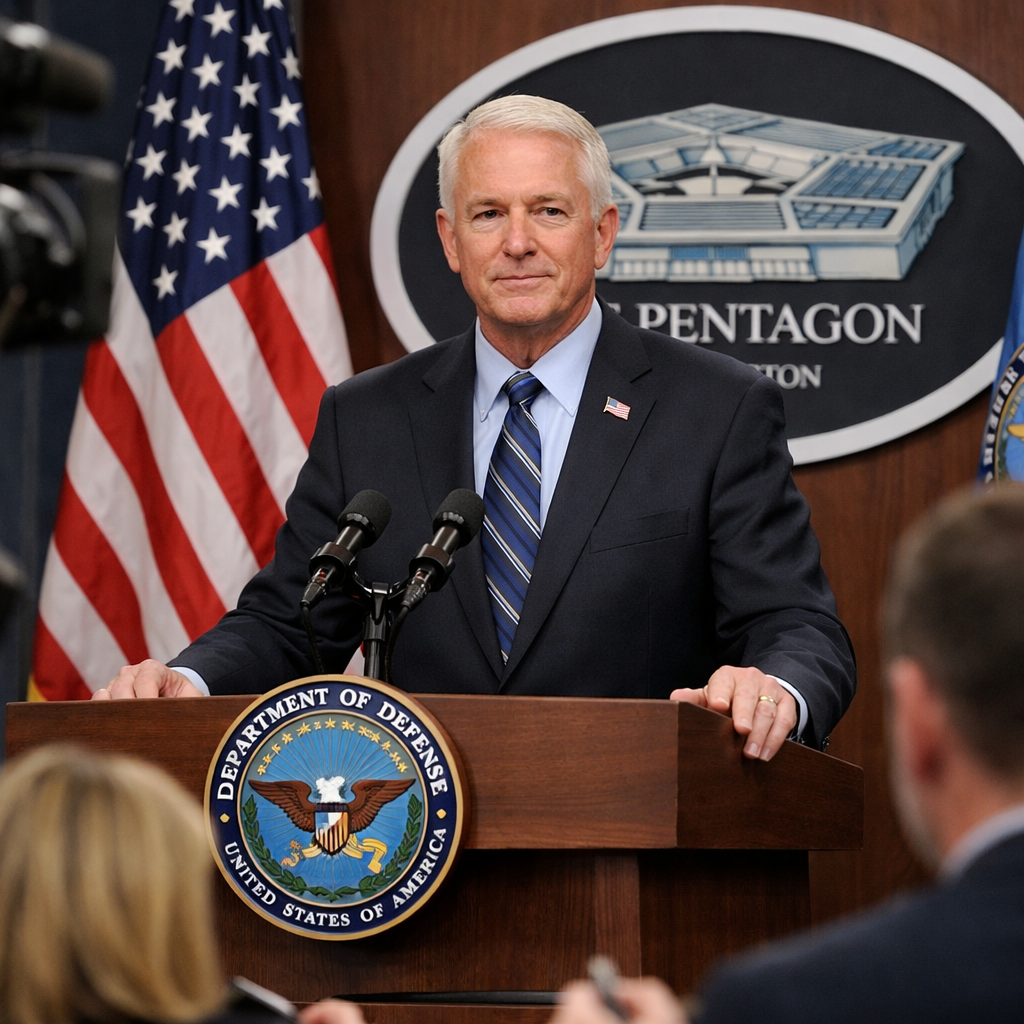
Two months before the Signal breach, the Pentagon introduced another communications challenge, this time by restricting press access rather than mismanaging it.
In October 2025, Defense Secretary Pete Hegseth required journalists to sign a new media policy that restricted their ability to move freely through the Pentagon.
More than 30 news organisations refused to comply. At least 15 major outlets, including NPR, removed their correspondents from the Pentagon workspace entirely.
The defense trade press issued a joint statement warning that “the public, industry, and indeed the department itself benefit from granting credentialed defense reporters access to unclassified areas in the Pentagon.”
A U.S. District Court vacated key provisions of the policy in March 2026, ruling them constitutionally deficient.
The DoD announced it was appealing, while revising the policy to comply with the court’s order.
The episode demonstrated a principle that every defense communications strategist must internalise: restricting legitimate press access does not protect operational security.
It transfers the narrative to critics, produces perceptions of institutional secrecy, and ultimately damages the public trust that defense institutions depend on far more than any single piece of sensitive information.
Accordingly, the Pentagon’s own statement, “the Department remains committed to transparency to promote accountability and public trust”, is not just a communications aspiration.
It is the foundation of democratic military legitimacy.
Building a Defense Communications Strategy That Works
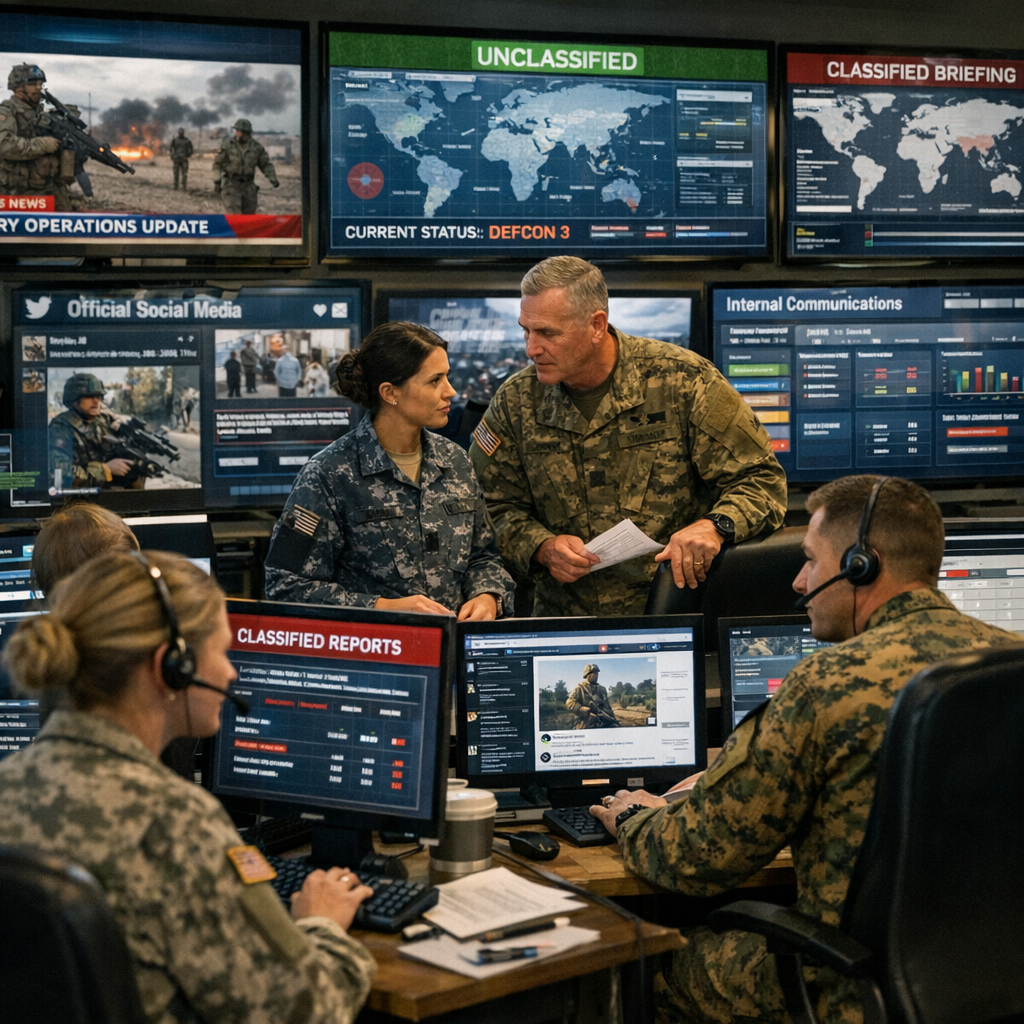
An effective defense communications strategy does not choose between security and transparency.
It builds the institutional architecture that delivers both, simultaneously, consistently, and under pressure. Here is what that architecture looks like:
A clear classification of a communications protocol
Every defense agency needs a documented, leadership-approved protocol that defines what information can be communicated publicly.
It also requires clearance before release, and what must never appear on any unclassified channel, including encrypted commercial applications.
The March 2025 Signal incident occurred in part because senior officials lacked, or ignored, clarity on approved platforms for sensitive communications.
A March 18, 2025, Pentagon memo confirmed that “third-party messaging apps (e.g., Signal) are NOT approved to process or store nonpublic unclassified information.”
That policy existed before the breach. The failure was not policy; it was communications discipline.
Consequently, protocol clarity alone is not sufficient.
Defense communications strategy must include regular training, leadership accountability, and documented consequences for protocol violations at every level, including the most senior.
Related: Regulatory Agency PR: How FDA and SEC Build the Most Powerful Public Confidence
A unified spokesperson system
The Signal breach response revealed what happens when multiple senior officials improvise independently.
Four different messages from four officials, delivered within hours of the incident, produced a credibility crisis that no individual statement could have caused alone.
An effective defense communications strategy designates one authorised spokesperson for each category of public communication.
All other officials route their public statements through that spokesperson, or through a coordination process that ensures message consistency before anyone speaks publicly.
This is not an extraordinary measure. It is standard operating procedure in every well-run defense communications function.
The 2025 experience demonstrated why it cannot be optional.
Proactive transparency on unclassified matters
Defense agencies build a credibility reserve by communicating proactively.
They share unclassified operations, budgets, personnel decisions, strategic priorities, and programme outcomes.
Citizens who trust a defense institution’s routine transparency are far more likely to accept, and less likely to challenge, the boundaries it draws around classified operations. Proactive transparency is not naivety.
It is the mechanism through which operational security restrictions maintain their democratic legitimacy.
A media relationship infrastructure built before a crisis arrives
The defense trade press statement of October 2025 noted that “for decades, the defense trade media has been a trusted source of news and insight about Defense Department programs, budgets, and strategy.”
Defense agencies with strong, sustained media relationships manage crises faster and with less reputational damage than those that treat journalists as adversaries.
Build your media relationships before you need them. Brief trusted defence correspondents proactively on non-sensitive matters.
Establish journalist familiarity with your spokesperson, so that when a crisis occurs, the first call goes to someone who already knows your institution.
Operational Security Messaging: What You Can Say, and How
Operational security, OPSEC, does not mean saying nothing. It means saying the right things to the right audiences, at the right time.
Defense agencies have long-established frameworks for this distinction.
The standard OPSEC process identifies critical information, analyses threats, assesses vulnerabilities, and determines countermeasures.
The communications dimension of that process is not an afterthought; it is central to how the overall framework functions.
In practice, effective OPSEC communications means:
- Communicating mission and strategy in terms of intent and values – not operational specifics that could benefit adversaries
- Acknowledging publicly what is already publicly known – rather than creating credibility gaps by denying verifiable information
- Communicating the human dimension of defense operations – personnel achievements, institutional commitments, community engagement – in ways that build public trust without compromising security
- Explaining the limits of what can be communicated – clearly and without apology – so that citizens understand the constraint, not just the silence
Overall, the public does not require operational detail to trust a defense institution.
They require evidence that the institution operates with integrity, accountability, and genuine regard for democratic values.
Those qualities can always be communicated, regardless of classification level.
The Congressional Communications Dimension
In October 2025, Defense Secretary Hegseth issued a memo centralising how Pentagon officials communicate with Congress, requiring all congressional communications to be coordinated through a single DoD point of contact.
Pentagon spokesman Sean Parnell described the move as “a pragmatic step” to “improve accuracy and responsiveness in communicating with Congress to facilitate increased transparency.”
The move reflected a genuine principle: unified, coordinated congressional communications prevent the contradictory messaging that damages institutional credibility.
However, it also raised concerns about whether centralisation might limit the independent oversight function that congressional communications exist to serve.
This tension, between coordination for consistency and openness for oversight, is one that every defense communications strategy must navigate deliberately.
The most effective resolution is transparency about the process itself.
Explaining how communications are coordinated, why, and what safeguards ensure that oversight access is protected within the coordination framework.
When to Bring In a Specialist Defense Communications Partner
Internal defense public affairs teams manage routine military communications effectively.
However, specific high-stakes scenarios consistently require specialist external expertise.
You need a specialist defense communications partner when:
- A security incident or classified information breach requires immediate, coordinated multi-audience crisis communications
- Media restriction policies have damaged press relationships, and institutional credibility requires a structured recovery.
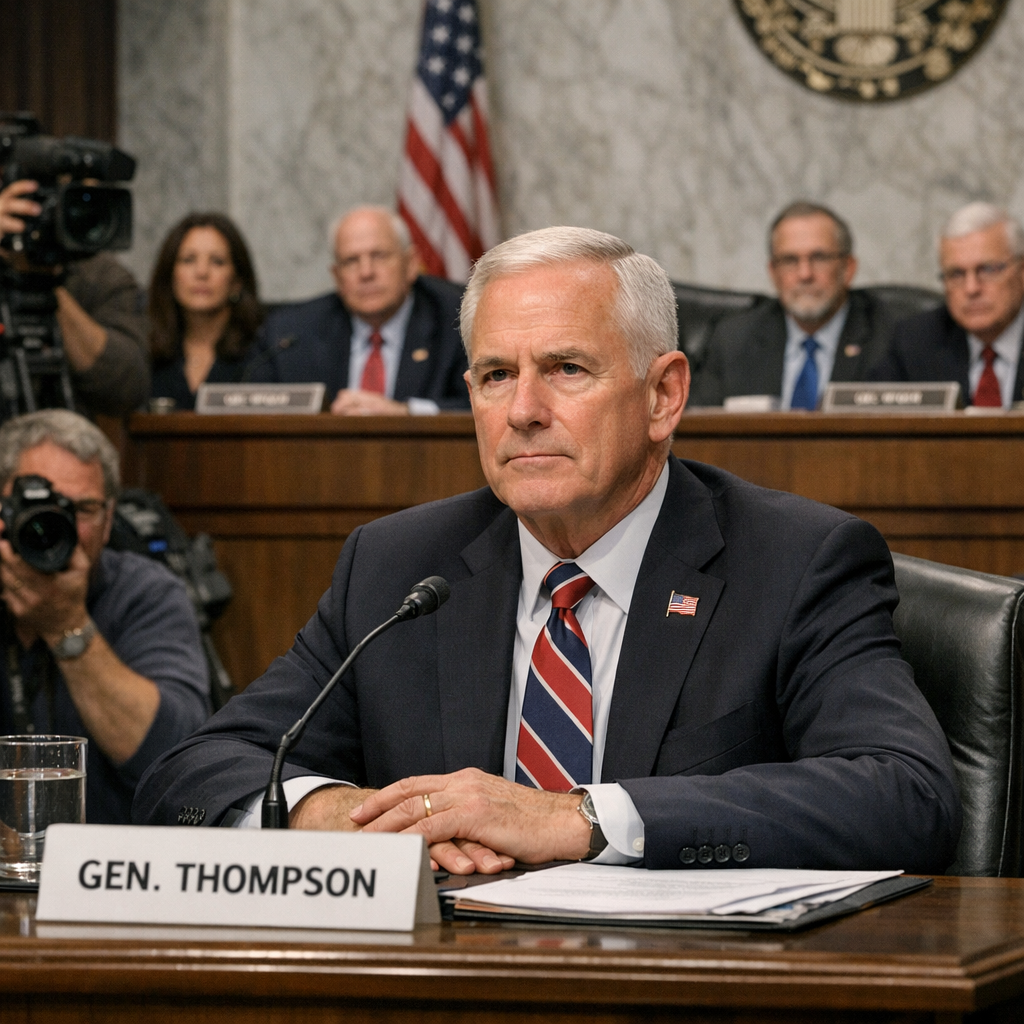
- Congressional testimony or oversight hearings require narrative management alongside legal preparation.
- A major strategic initiative needs public communications support that internal public affairs capacity cannot sustain.
- Your agency needs an independent communications audit that reveals institutional blind spots before a crisis exposes them publicly.
Spred Communications builds defense communications strategies for defense agencies, national security institutions, and senior military officials.
We combine operational security discipline, elite media placement, and crisis-proof communications architecture.
We protect the institutional integrity that democratic defense depends on, before the moment of scrutiny arrives.
Closing Thoughts
The events of 2025 made one lesson impossible to ignore.
A defense communications strategy that fails, whether through careless disclosure or excessive restriction, damages the very institution it was meant to protect.
Operational security and democratic transparency are not opposites.
They are complementary obligations, and the defense agencies that manage both successfully are the ones that invest in communications discipline at every level.
This is from the most senior official to the frontline public affairs officer.
Build your protocols, train your teams, and unify your spokesperson function.
Invest in your media relationships. Communicate proactively about everything you can, so that when you cannot communicate, the public already trusts the institution that is asking them to accept the silence.
This is because democratic defense institutions do not earn public trust through secrecy.
They earn it through demonstrated integrity, and integrity must be communicated to be believed,
