
Regulatory agency PR is one of the most demanding disciplines in government communications.
You serve the public, oversee industry, manage legal exposure, and protect institutional credibility, all at the same time.
The FDA, SEC, and EPA do not get the luxury of a quiet news cycle.
Every enforcement action, every decision letter, every public statement is scrutinised by industry, media, investors, advocacy groups, and citizens simultaneously.

A single miscommunication can trigger market panic, legal challenges, or a collapse of the public trust your agency depends on to function.
Yet the regulatory agencies that do this well, that build genuine, lasting public confidence, share one common trait. They treat communications as a strategic discipline, not an administrative function.
This article breaks down how they do it and what every regulatory agency can learn from the best.
Regulatory Agency PR: Table of Contents
- Why Regulatory Agency PR Is Unlike Any Other
- The FDA’s Radical Transparency Shift: A PR Case Study
- How the SEC Builds Credibility Through Compliance Communications
- EPA’s Compliance First Communications: A Transparency Model
- The 5 Principles of High-Impact Regulatory Agency PR
- When Regulatory Agencies Need External PR Support
- Closing Thoughts
Why Regulatory Agency PR Is Unlike Any Other
Most government agencies communicate with one primary audience. Regulatory agencies communicate with many simultaneously, and often in conflict with each other.
The FDA communicates with patients, healthcare providers, pharmaceutical manufacturers, investors, legislators, and the general public, all of whom interpret the same regulatory decision very differently.
The SEC communicates with investors, corporate executives, compliance officers, journalists, and market analysts, each looking for something different in every public statement.
The EPA communicates with environmental advocates, industry lobbyists, state governments, tribal authorities, and citizens — often holding opposing views on the same enforcement action.
Furthermore, every public statement from a regulatory agency carries legal weight.
The words used in an FDA drug approval announcement, for example, directly shape how companies communicate that approval to investors.
In July 2025, the FDA announced it would begin publishing its Complete Response Letters, the decision letters it issues when denying drug and device applications, in real time.
That single policy change transformed how the agency’s communications intersect with SEC disclosure obligations, investor relations, and public health trust simultaneously.
This is the complexity that makes regulatory agency PR uniquely demanding.
This is why the agencies that communicate best are the ones that invest most heavily in communications strategy, not just compliance.
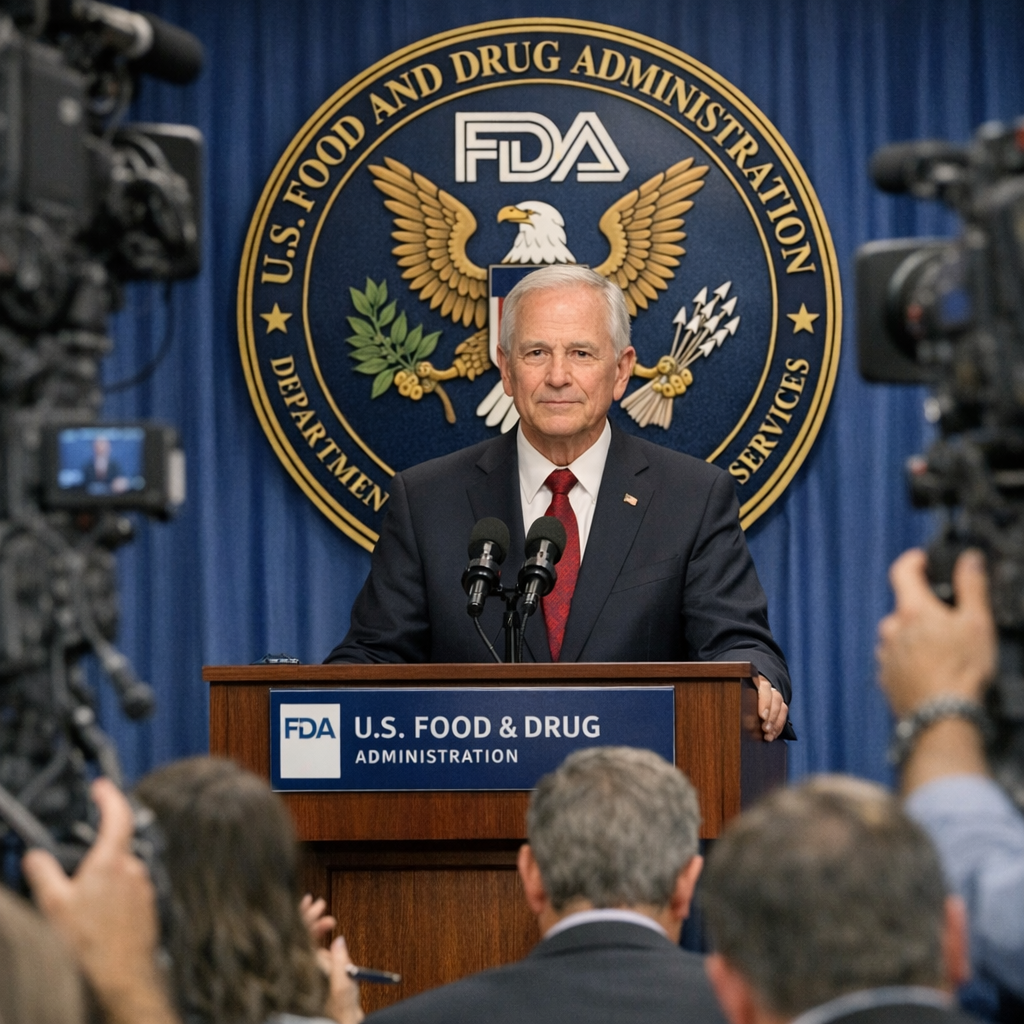
The FDA’s Radical Transparency Shift: A PR Case Study
In July 2025, the FDA made a landmark communications decision.
Under Commissioner Marty Makary’s leadership, the agency committed to publishing over 200 previously undisclosed Complete Response Letters, the letters it issues when denying drug or device applications, as part of what it called a “radical transparency” initiative.
This was not just a regulatory policy change. It was a regulatory agency PR transformation.
By making denial decisions publicly visible, the FDA did several things simultaneously.
- It built public trust by demonstrating that its decision-making process was transparent and evidence-based.
- It gave drug developers industry-wide visibility into common submission mistakes, reducing future errors.
- It reinforced the FDA’s credibility as an institution that operates on scientific standards, not political ones.
Accordingly, the communications lesson is clear.
Proactive transparency, releasing information before the public demands it, builds more institutional credibility than reactive disclosure ever can.
Under Commissioner Makary, the FDA shifted toward a “policy from the podium” approach.
This strategy uses media interviews, public forums, and podcasts alongside formal Federal Register notices to modernise how the agency communicates regulatory priorities.
This approach does carry risk. Informal statements from the Commissioner do not carry binding regulatory authority.
But the credibility built through direct, human communication consistently outperforms the trust generated by dense Federal Register language that few citizens can read.
How the SEC Builds Credibility Through Compliance Communications
The SEC’s communications challenge is distinct from the FDA’s in one critical way. Every SEC statement moves markets.
A regulatory disclosure, an enforcement announcement, or even a commissioner’s informal comment can trigger immediate price movements in publicly traded securities.
That reality creates a communications environment where precision is not optional; it is the entire discipline.
The SEC’s approach to building public confidence rests on three principles that every regulatory agency can learn from:
Consistency between public statements and formal disclosures
Regulation FD, Fair Disclosure, prohibits companies from sharing material information with select investors without simultaneous public disclosure.
The SEC enforces this rule aggressively.
In 2019, it charged TherapeuticsMD with Regulation FD violations after a company executive described an FDA meeting as “very positive and productive” to sell-side analysts without issuing a concurrent public statement.
The company paid a $200,000 penalty.
The lesson for regulatory agencies is the same as it is for the companies they oversee: consistency between what you say privately and what you say publicly is the foundation of institutional credibility.
Speed matched to accuracy
SEC enforcement announcements move fast. But fast announcements that contain errors damage the agency’s credibility with the same audiences they are designed to inform.
The SEC’s communications infrastructure is built around formal disclosure governance, legal review protocols, and coordinated investor relations communication.
It exists precisely to achieve both speed and accuracy simultaneously.
Proactive investor communication during regulatory uncertainty
When the regulatory environment shifts, markets need context. The SEC builds institutional trust by explaining the reasoning behind enforcement shifts, not just announcing outcomes.
That transparency signals that the agency’s decisions are principled, not arbitrary.
EPA’s Compliance First Communications: A Transparency Model
In December 2025, the EPA’s Office of Enforcement and Compliance Assurance issued a landmark internal policy directive, the “Compliance First” framework.
The framework was significant not just for its regulatory content, but for its communications philosophy.
OECA head Pritzlaff called explicitly for “open communication and genuine collaboration” with states, tribal authorities, and regulated entities.
EPA staff were directed to maintain “transparent, timely, and collaborative two-way communication” as standard practice, not as a crisis response.
The framework’s stated goal was a “no surprises” approach to compliance enforcement.
That phrase is itself a communications strategy. It signals to regulated entities that the EPA intends to be a partner in compliance, not an adversary waiting to issue penalties.
Furthermore, the framework committed the EPA to proactive outreach, technical assistance, and training, helping regulated entities understand requirements before violations occur, rather than after.
This shift from adversarial to collaborative compliance communications is one of the most significant regulatory agency PR evolutions of 2025.
It reflects a broader trut- the agencies that build the strongest public confidence are the ones that treat their stakeholders as partners in their mission, not subjects of their authority.
Related: Executive Media Training for Exclusive High-Stakes Leaders
The 5 Principles of High-Impact Regulatory Agency PR
Every successful regulatory agency PR strategy, whether at the FDA, SEC, EPA, or any other compliance body, is built on five core principles:
1. Proactive disclosure over reactive damage control
Agencies that release information proactively, before journalists, advocacy groups, or legislators force the issue, consistently maintain stronger institutional credibility.
Proactive disclosure signals control, transparency, and confidence. Reactive disclosure signals defensiveness, regardless of the facts.
2. Multi-audience message architecture
A single statement must simultaneously serve patients, investors, industry, media, and the public. Each audience member reads the same words differently.
Building a message architecture that works for all of them, without contradicting itself, is the central craft of regulatory agency PR.
3. Scientific credibility as a communications asset
Regulatory agencies hold a unique credibility asset that private organisations cannot replicate: they are the designated scientific authority in their domain.
FDA drug safety guidance, SEC financial disclosure standards, and EPA environmental data all carry the weight of institutional scientific authority.
Communications strategies that lead with that authority, clearly, accessibly, and consistently, build public confidence faster than any other approach.
4. Speed without accuracy sacrifice
In a breaking news environment, regulatory agencies face constant pressure to respond faster than their legal and scientific review processes allow.
The agencies that manage this tension best build pre-approved messaging frameworks for predictable scenarios, drug recalls, enforcement announcements, and market disruptions.
This allows rapid response without sacrificing accuracy.
5. Closing the feedback loop with stakeholders
Regulatory agencies that solicit stakeholder input and then communicate what they did with it consistently earn stronger long-term credibility than those that consult widely and then go silent.
Closing the feedback loop, explaining how stakeholder input shaped regulatory decisions, is one of the highest-return compliance communications investments an agency can make.

When Regulatory Agencies Need External PR Support
Internal government communications teams manage routine regulatory messaging effectively.
However, specific high-stakes situations consistently require specialist external support.
You need a specialist regulatory agency PR partner when:
- A major enforcement action or policy change requires coordinated multi-audience messaging at speed
- A regulatory transparency initiative, like the FDA’s radical transparency shift, requires narrative management across industry, investor, and public audiences simultaneously.
- A compliance communications failure has damaged institutional credibility and requires a structured recovery.
- A new commissioner or agency leadership is reshaping the agency’s public communications posture
- Cross-agency coordination, as seen between the FDA, SEC, EPA, and USDA, requires neutral narrative management that no single agency’s communications team can own
Spred Communications builds regulatory agency PR strategies for government agencies, public institutions, and regulated entities navigating complex compliance communications environments.
We combine multi-audience message architecture, elite media placement, and crisis-proof communications frameworks to protect the institutional credibility that regulatory authority depends on.
Read: Corporate Trust: The Quiet Force Behind Strong Brands
Closing Thoughts
Public confidence in regulatory agencies is earned through consistent transparency, precise communications, and the kind of proactive disclosure that signals institutional integrity rather than political calculation.
The FDA, SEC, and EPA are each navigating a more complex, more visible, and more scrutinised communications environment than at any point in their histories.
The agencies building the strongest public confidence are those that treat communications as a strategic asset to be invested in.
Build your multi-audience message architecture.
Prioritise proactive disclosure. Lead with scientific authority.
Close your stakeholder feedback loops, and invest in the specialist communications expertise that keeps your agency’s credibility intact when the next moment of scrutiny arrives.
Because in regulatory affairs, public confidence is not a soft outcome. It is the mechanism through which your agency’s authority actually works.
