
Estimated reading time: 14 minutes
Introduction
Executive reputation management protects the public image of high-profile leaders. Today, every executive faces constant digital scrutiny. A single news cycle can reshape years of trust.
Elite leaders sit at the center of public attention. Their names appear in search results, media reports, and social feeds. As a result, they become high-risk visibility targets daily.

Reactive PR no longer works for leaders at this level. Waiting for a crisis before acting puts everything at risk. The damage often spreads faster than any response team can move.
That is why smart leaders treat reputation as a strategic asset. They protect it the same way they protect financial portfolios. Executive reputation management is not a luxury anymore. It is a requirement for leaders who operate at the highest levels.
You need a system that works before problems surface. You need advisors who understand power, perception, and precision. This guide walks you through every critical element of executive reputation protection.
We wrote this for founders, board members, and C-suite leaders. If your name carries weight, this article is for you.
Executive Reputation Management for Exclusive Elite Leaders: Table of Contents
- Introduction
- What Is Executive Reputation Management?
- Why Executive Reputation Management Is Now a Strategic Necessity
- Executive Online Reputation Management in the Digital Era
- Best Tools for Executive Reputation Management
- How To Choose A Firm Specializing In Executive Personal Branding
- Top Services for Managing Executive Reputation Crises
- How To Build A Positive Executive Reputation On Social Media
- Steps To Remove Inaccurate Negative Content From Search Results
- Executive Reputation Management NYC and Global Advisory Standards
- Cost Of Engaging A Reputation Management Service For Executives
- Executive Reputation Management Services by Spred
- Frequently Asked Questions
- Conclusion
What Is Executive Reputation Management?
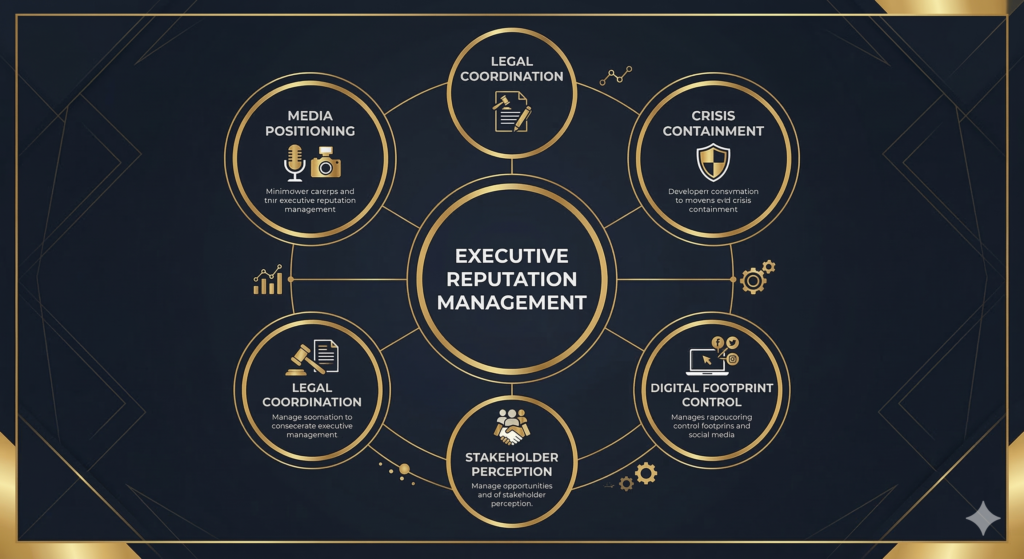
So, what is reputation management at the executive level? Simply put, it is the practice of shaping public perception. It covers search results, media narratives, and digital presence.
Executive management meaning goes beyond running companies. It now includes managing how the world sees you. Your executive reputation directly affects deals, partnerships, and investor confidence.
There is a clear difference between corporate and executive reputation. A company brand can survive a bad quarter. A personal reputation, on the other hand, often cannot recover as easily.
Leaders today are brand assets for their organizations. When a CEO’s reputation drops, stock prices often follow. Research from Weber Shandwick shows 44% of a company’s value ties to CEO reputation.
Because of this, your reputation becomes financial leverage. Strong perception opens doors to capital, talent, and influence. Weak perception closes those same doors quickly.
You should think of your personal reputation as currency. It holds measurable value in every business interaction. Protecting it requires deliberate strategy, not hope.
Why Executive Reputation Management Is Now a Strategic Necessity
Investor perception shifts faster than ever before. A leaked email or misquoted statement can trigger stock movement. Executive reputation management now sits at the core of risk strategy.
Regulatory bodies watch executive behavior more closely today. Public statements face legal and compliance scrutiny in real time. Leaders must consider every word they say or post.
Media amplification speed has changed the entire game. A story published at 9 AM can trend globally by noon. Social media volatility then multiplies the reach even further.
Litigation exposure also rises with public visibility. Opposing parties often use reputation attacks as legal tactics. They weaponize search results and media narratives against leaders.
Elite executives no longer manage visibility. They architect perception. Every public appearance, interview, and social post must serve a purpose.
You cannot afford to leave your narrative to chance. If you do, someone else will write it for you. That rarely ends well for leaders with significant influence.
Executive Online Reputation Management in the Digital Era
Executive online reputation management starts with search engine control. The first page of Google shapes how the world sees you. You must own that digital real estate deliberately.
Best practices for monitoring executive online presence include daily tracking. You should monitor news mentions, social tags, and forum discussions. How to monitor executive reputation online effectively requires both tools and human analysis.
Knowledge panel management plays a critical role here. Your Google Knowledge Panel often serves as your digital business card. Inaccurate or outdated information creates immediate trust issues.
Your media footprint needs active management across all channels. Every published article, podcast appearance, and quote matters. These digital assets either strengthen or weaken your positioning.
AI-generated misinformation presents a growing threat to leaders. False content can now appear realistic and spread quickly. Social listening systems help you catch these threats early.
You should set up alerts for your name and key affiliates. Monitoring tools flag negative sentiment before it escalates. Early detection gives you the advantage of a fast, controlled response.
Related: What Enterprise Reputation Management Really Means
Best Tools for Executive Reputation Management
The best tools for executive reputation management fall into four categories. Each serves a specific function within your protection system. No single tool covers everything you need.
Media monitoring platforms track news coverage across outlets worldwide.
- Meltwater provides real-time media intelligence globally
- Cision tracks earned media and press mentions
- Google Alerts offers basic but useful free monitoring
Sentiment analysis tools measure how people feel about you online.
- Brandwatch analyzes tone across millions of conversations
- Talkwalker identifies sentiment trends over time
- Repustate processes multilingual sentiment data accurately
Social listening dashboards capture mentions across social platforms.
- Sprout Social monitors brand mentions and engagement patterns
- Mention tracks real-time conversations about your name
- Hootsuite Insights provides social data at scale
Crisis alert systems notify your team when threats emerge.
- Signal AI detects risk signals before stories break
- Dataminr delivers real-time alerts on emerging situations
- NewsWhip predicts which stories will gain traction fast
These tools support your strategy, but they do not replace it. Technology works best when guided by experienced advisors. Tools collect data, while strategists turn data into action.
How To Choose A Firm Specializing In Executive Personal Branding
How to choose a firm specializing in executive personal branding requires careful evaluation. Not every agency understands the stakes involved. You need a reputation management consultant who operates at the highest level.
A true reputation management expert offers more than media contacts. Executive reputation management services must include legal coordination and crisis planning. Here is what to look for when evaluating firms.
Where to find executive reputation management consultants who deliver results:
- Ask trusted legal counsel for confidential referrals
- Review case studies from firms serving Fortune 500 leaders
- Evaluate firms that work across media, legal, and digital channels
Confidentiality standards must be non-negotiable in your selection process. Your firm should operate under strict NDAs at every level. Information leaks from your own advisors create the worst crises.
Media network strength determines how fast a firm can respond. Strong relationships with editors and journalists accelerate positive coverage. Weak networks leave your story in the hands of others.
Crisis architecture capability separates adequate firms from elite ones. Your firm should build crisis protocols before any incident occurs. They must plan for scenarios most leaders never anticipate.
Strategic narrative control means shaping your story across all channels. Your firm should align your messaging across media, social, and stakeholder communications. Every touchpoint must reinforce the same clear narrative.
If you are evaluating firms right now, start with a confidential consultation. The right partner will ask hard questions before offering solutions.
Top Services for Managing Executive Reputation Crises
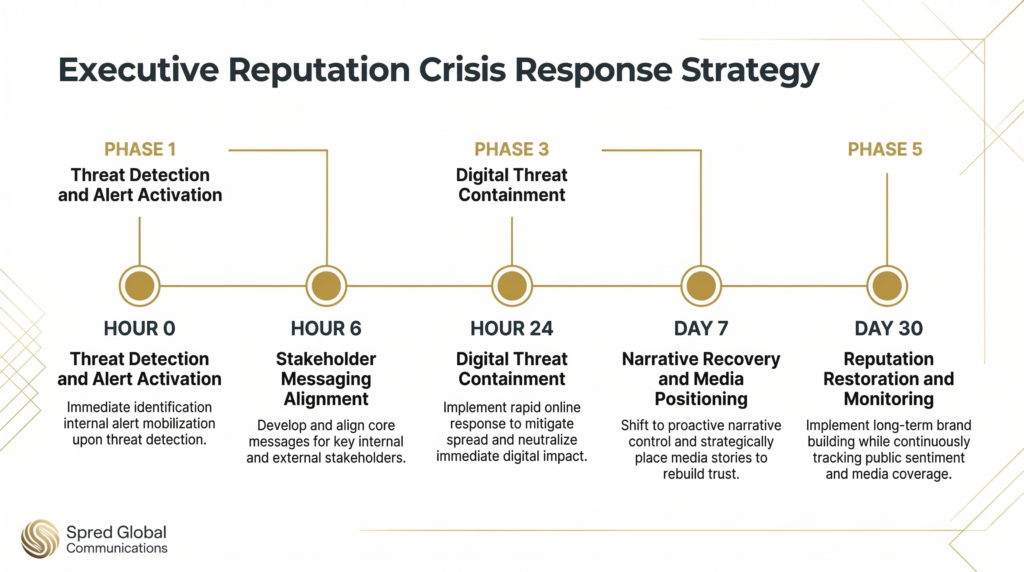
Top services for managing executive reputation crises go beyond damage control. True crisis management prevents situations from escalating in the first place. Here is how elite advisory firms structure their crisis services.
Crisis simulation planning prepares your team for real-world scenarios. Firms run tabletop exercises that test their response protocols. These simulations reveal gaps before actual crises expose them publicly.
Digital threat containment stops negative content from spreading further. This includes rapid response on social platforms and search engines. Speed matters more than perfection in the first 72 hours.
Stakeholder messaging alignment ensures consistent communication across audiences. Your board, investors, employees, and media contacts all need coordinated updates. Mixed messages during a crisis multiply the damage significantly.
Regulatory communication management handles responses to government and compliance bodies. These communications require legal precision and strategic framing. One careless statement can trigger investigations or penalties.
Litigation reputation support protects your public image during legal proceedings. Opposing counsel often leaks information to damage your standing. Your reputation team must counter these tactics without escalating conflict.
This is where Spred Global Communications delivers a clear advantage. Our crisis teams operate with discretion, speed, and strategic depth. We protect leaders when the stakes are at their highest.
How To Build A Positive Executive Reputation On Social Media
How to build a positive executive reputation on social media starts with LinkedIn. This platform serves as the primary stage for executive thought leadership. Your profile must reflect authority, clarity, and strategic positioning.
Leading platforms for managing social media for high-profile individuals include:
- LinkedIn for professional authority and industry influence
- X (formerly Twitter) for timely commentary and visibility
- Instagram for controlled personal brand storytelling
- YouTube for long-form thought leadership content
Controlled thought leadership positions you as a trusted voice. You should publish insights that reflect your expertise consistently. Each post must add value to your audience and industry.
Media amplification strategy turns your social content into press coverage. Journalists frequently source stories from executive social posts. Strong social presence generates earned media opportunities naturally.
Personal brand and institutional brand must align clearly. Your messaging should complement your company’s positioning at all times. Conflict between the two creates confusion and erodes trust.
Post consistently, but never without strategic intent behind it. Every piece of content should serve your broader reputation goals. Random posting without a strategy wastes your time and attention.
Related: Executive Public Relations: CEO Reputation & Thought Leadership
Steps To Remove Inaccurate Negative Content From Search Results
Steps to remove inaccurate negative content from search results require a methodical approach. You must act carefully and ethically throughout the entire process. Rushing or using black-hat tactics creates more problems.
Legal route through defamation claims works when the content is provably false. Your attorney can send cease-and-desist letters to publishers directly. Courts order force platforms to remove defamatory material when warranted.
SEO suppression strategy pushes negative results off the first page. This involves creating and optimizing high-authority positive content. Over time, strong assets outrank weaker negative pages in search.
The content displacement method fills search results with controlled assets. You publish articles, interviews, profiles, and press releases strategically. Each piece targets specific keywords tied to your name.
Platform takedown processes vary across Google, Bing, and social networks. Each platform has specific policies for removing harmful content. Understanding these policies accelerates the removal timeline significantly.
Crisis escalation protocol activates when standard methods prove insufficient. This may involve coordinating legal, PR, and digital teams simultaneously. Complex situations demand multi-channel responses executed with precision.
You should always pursue these steps through ethical and legal channels. Shortcuts damage credibility and often make situations worse. Professional firms handle this work with the care it demands.
Executive Reputation Management NYC and Global Advisory Standards
Executive reputation management NYC serves as a global hub for elite advisory. New York attracts the highest concentration of Fortune 500 executives. Proximity to major media outlets creates natural strategic advantages here.
Geographic authority matters when managing high-profile reputations. Firms based in major financial centers maintain stronger media relationships. These connections accelerate response times during critical situations significantly.
Global advisory capacity extends protection beyond any single market. Cross-border crisis management requires an understanding of different legal systems. Cultural nuances also affect how messages land in different regions.
Leaders with international profiles need firms that operate globally. A crisis in London may require coordination with teams in Dubai. Spred Global Communications maintains advisory capacity across key global markets.
Whether you operate in Lagos, New York, or the UAE, standards must remain consistent. Your reputation does not stop at any border. Neither should your protection strategy.
Cost Of Engaging A Reputation Management Service For Executives
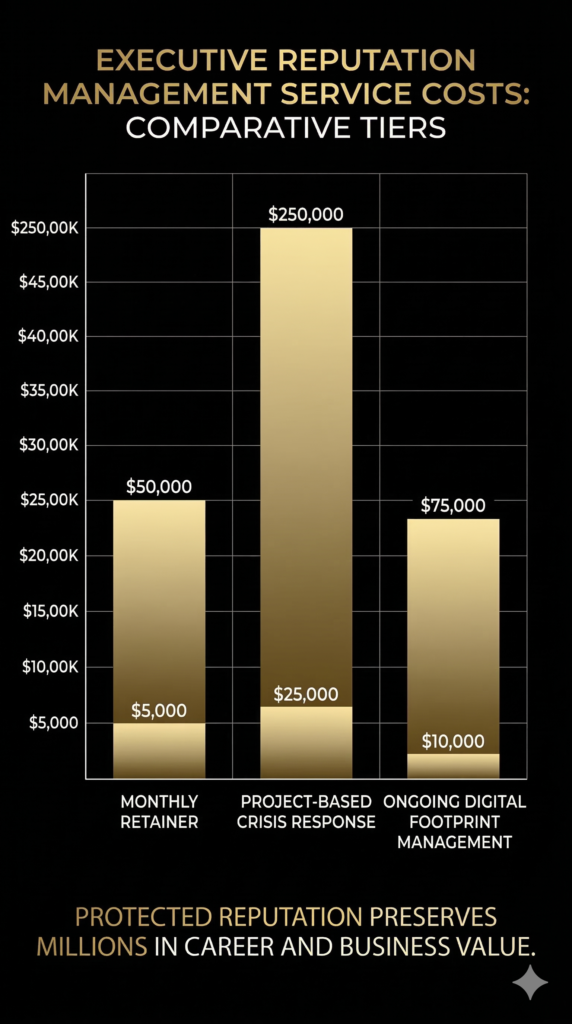
The cost of engaging a reputation management service for executives varies widely. Understanding pricing structures helps you make informed decisions. Here is how fees typically break down.
Retainer-based engagements provide ongoing monitoring and strategic support. Monthly retainers for executive-level services range from $5,000 to $50,000. The scope depends on your visibility level and risk profile.
Project-based pricing covers specific campaigns or crisis responses. Single crisis management projects can range from $25,000 to $250,000. Complex, multi-market situations cost more due to coordination demands.
Crisis premium pricing applies during active reputation emergencies. Firms charge higher rates for rapid-response work under pressure. This reflects the specialized expertise and urgency required.
Cheap services fail for several important reasons. Budget firms lack media relationships, legal expertise, and crisis depth. They often use template approaches that do not fit executive-level situations.
The ROI of executive reputation management is measurable and significant. Protected reputation preserves deal flow, board positions, and market value. One prevented crisis can save millions in lost opportunities.
Think of this cost as an investment in your career capital. The leaders who protect their reputations early spend far less overall. Those who wait for a crisis always pay a much higher price.
Related: Reputation Strategy for Leaders Who Cannot Afford to Be Misunderstood
Executive Reputation Management Services by Spred
Spred Global Communications provides executive reputation management services built for elite leaders. We serve founders, board members, investors, and public-facing executives worldwide. Our approach combines discretion with strategic precision.
Discreet advisory forms the foundation of every client relationship. We operate under strict confidentiality protocols at every level. Your engagement with us remains completely private.
Reputation audits give you a clear picture of your current standing. We analyze search results, media coverage, social sentiment, and digital footprint. This audit identifies vulnerabilities before they become public problems.
Crisis containment activates the moment a threat is detected. Our teams coordinate across legal, media, and digital channels simultaneously. We control narratives before they control you.
Media positioning places your voice in the right publications strategically. We secure earned media that reinforces your authority and expertise. Every placement serves your broader reputation architecture.
Digital footprint dominance ensures you own the first page of Google. We build and optimize content assets that reflect your true standing. Negative or irrelevant results get displaced through ethical SEO methods.
We work with a select number of clients at any given time. This ensures every leader receives focused, senior-level attention. Our results speak through the careers and reputations we have protected.
Book a Confidential Strategy Call with our senior advisory team today. Let us show you exactly where your reputation stands right now.
Frequently Asked Questions
What is executive reputation management?
It is the strategic practice of monitoring, protecting, and shaping public perception. Leaders use it to control search results, media narratives, and digital presence. It combines PR, legal coordination, SEO, and crisis planning into one system.
How much does executive reputation management cost?
Monthly retainers typically range from $5,000 to $50,000, depending on scope. Crisis projects can cost between $25,000 and $250,000 or more. Investment level depends on your visibility, risk exposure, and objectives.
How long does it take to repair an executive’s reputation?
Minor issues may be resolved within 30 to 90 days with focused effort. Significant reputation damage often requires 6 to 12 months of sustained work. Complex situations involving legal proceedings may take longer.
Can negative search results be removed?
Yes, in many cases negative results can be removed or suppressed. Legal takedowns work for defamatory or false content specifically. SEO suppression and content displacement push remaining results off page one.
What tools monitor executive online presence?
Brandwatch, Meltwater, Mention, and Google Alerts are widely used options. Sentiment analysis tools like Talkwalker add deeper insight into perception. A reputation management expert combines these tools with human judgment for the best results.
Conclusion
Your reputation is the most valuable asset you carry as a leader. It influences every deal, relationship, and opportunity you encounter. Protecting it requires strategy, not reaction.
Executive reputation management is now a core function of leadership. The leaders who invest in it early gain lasting competitive advantages. Those who ignore it risk losing everything they have built.
The digital environment moves fast and forgives slowly. One unaddressed threat can reshape your public narrative permanently. You deserve advisors who understand these stakes deeply.
Spred Global Communications exists to serve leaders at this exact level. We bring decades of experience in media, crisis, and digital strategy. Our team protects reputations that cannot afford to be left unguarded.
Take the first step today. Book a Confidential Strategy Call with our senior team. Let us architect the perception your leadership deserves.