
Strategic public sector PR rebuilds that essential trust through systematic transparency and clear communication. It transforms dense bureaucratic language into messages ordinary citizens understand.
The Public sector faces challenges that private companies may never encounter. Government agencies serve every citizen, not just paying customers.
They operate under constant public scrutiny. They must remain politically neutral while explaining complex policies clearly. Most importantly, they carry the weight of public trust that democracy itself depends on.

The gap between government institutions and the people they serve grows wider each year. Citizens doubt official information. They question agency motive and turn to unreliable sources filling the vacuum left by poor official communication.
This trust crisis threatens the effectiveness of even the best-intentioned public programs. Without public confidence, policies fail regardless of their merit.
Public sector PR provides timely information when people need it most and demonstrates accountability when mistakes occur.
These practices create the confidence that allows democratic institutions to function effectively.
This guide shows how government agencies and public institutions can build lasting trust through professional public sector PR strategies.
From crisis communication to ongoing stakeholder engagement, each section provides practical frameworks that communications teams can implement immediately.
The stakes remain high for maintaining democratic legitimacy and program effectiveness.
Public Sector PR Trust: How to Build Confidence in Government Institutions: Table of contents
- Why Public Sector PR Differs From Corporate Communications
- Building Trust Through Radical Transparency
- Crisis Communication in Public Sector PR
- Engaging Citizens Through Multiple Channels
- Measuring Success in Public Sector PR
- Combating Misinformation and Building Media Literacy
- Building Internal Culture Supporting Public Sector PR
- Accessibility and Inclusive Communication
- Long-term Trust Building Through Public Sector PR
- Professional Support for Public Sector PR
Why Public Sector PR Differs From Corporate Communications
Understanding the unique nature of public sector PR starts with recognizing its distinct mission and constraints. Corporate communications serves shareholders and customers primarily.
Public sector communications serves every citizen regardless of agreement or support. This universal service mandate creates fundamentally different communication requirements and expectations.
Government agencies face accountability standards far exceeding private sector requirements. Every communication becomes public record subject to freedom of information requests.
Every statement faces intense scrutiny from political opponents and watchdog groups. Mistakes that would barely register in corporate settings become front-page scandals in the public sector.
Consequently, public sector PR demands extraordinary precision and thoughtfulness in every message.
Key differences shaping public sector communications:
- Universal audience: Serving all citizens, not just supporters or customers
- Political neutrality: Avoiding partisan positions while explaining policy clearly
- Public transparency: Operating under open records laws and constant scrutiny
- Mission focus: Communicating service delivery rather than competitive advantage
- Long timelines: Building trust over years and decades, not quarters
- Crisis sensitivity: Facing higher stakes when communication failures occur
Research shows that public trust in government institutions has declined from 73% in 1958 to just 20% today. This trust crisis makes effective public sector communications more critical than ever.
Agencies that communicate well maintain public confidence. Those that communicate poorly face skepticism that undermines even excellent programs.

Building Trust Through Radical Transparency
Transparency forms the foundation of effective public sector PR in democratic societies. Citizens have the right to understand how their government operates. They need access to information affecting their lives.
They deserve honest accounting of both successes and failures. Agencies that embrace radical transparency build trust that withstands inevitable controversies and mistakes.
Many government agencies default to opacity through habit rather than intention. They use complex bureaucratic language, delay releasing information until forced by formal requests.
Also, they hide failures while highlighting successes. This approach backfires completely in digital environments where secrets rarely stay secret. Instead, agencies practicing strategic public sector PR proactively share information before being asked.
Transparency practices that build public confidence:
- Proactive disclosure: Publishing information before requests arrive
- Plain language: Writing for eighth-grade reading level accessibility
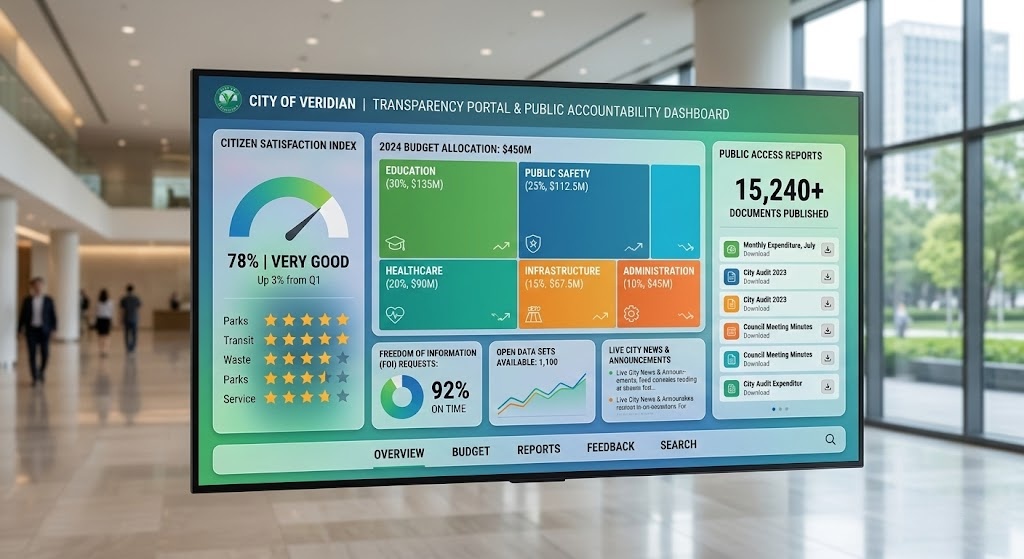
- Data visualization: Making complex information understandable through graphics
- Regular updates: Providing consistent information on ongoing initiatives
- Honest failures: Acknowledging mistakes openly with corrective actions
- Accessible formats: Offering information through multiple channels and languages
The U.S. Centers for Disease Control demonstrates is an example of transparency excellence through their clear public health communication. They publish data openly, acknowledge uncertainty when it exists and correct mistakes promptly.
This approach maintains credibility even when policies change as new evidence emerges. Professional agencies help government clients adopt similar transparency frameworks.
Related: How Government Communications Builds Proven Public High Trust
Crisis Communication in Public Sector PR
Government crises demand specialized public sector PR responses that balance urgency with accuracy. Public safety emergencies require immediate communication even when complete information remains unavailable.
Political scandals need transparent investigation while respecting due process. Policy failures demand honest accounting while maintaining institutional credibility. Each situation tests whether agencies have built the trust reserves needed to weather storms.
The first hours of a public sector crisis determine whether trust strengthens or collapses. Agencies that respond quickly with available facts maintain credibility. Those that delay while crafting perfect messages lose control of narratives.
Citizens understand that early information may be incomplete. They cannot forgive agencies that appear to hide information or mislead them intentionally. Therefore, effective public sector PR during crises emphasizes speed and honesty over polished messages.
Crisis response framework for government agencies:
- The first Hour : Acknowledge the situation publicly even without complete details
- 2-4 Hours: Provide initial facts with clear statement of unknowns
- 4-12 Hours: Update regularly as information becomes verified
- 1-7 Days: Maintain daily updates showing ongoing response actions
- 2 Weeks+ : Share investigation findings and corrective measures transparently
New Zealand’s government communication during the Christchurch mosque attacks exemplified crisis communication excellence. Prime Minister Jacinda Ardern spoke with empathy and clarity within hours.
Her government provided regular updates as situations developed. They demonstrated decisive action while respecting affected communities. This approach maintained public confidence during unprecedented tragedy.
Engaging Citizens Through Multiple Channels
Modern public sector PR requires reaching citizens where they already spend time. Different demographics consume information through different channels.
Younger citizens prefer social media and mobile apps. Older populations rely on traditional media and official websites.
Low-income communities may depend on radio and community centers. Effective strategies use multiple channels simultaneously rather than assuming single platforms reach everyone.
Government agencies face particular challenges with digital communication. They must maintain accessible websites meeting legal requirements.
Also, they need social media presence without appearing partisan. They require mobile apps providing services efficiently and should offer email updates citizens can trust.
Coordinating consistent messages across these platforms demands sophisticated public sector communications infrastructure and expertise.
Multi-channel engagement strategies for government:
- Official websites: Clear navigation, plain language, mobile optimization
- Social media: Facebook, Twitter, Instagram reaching different demographics
- Email newsletters: Regular updates citizens can subscribe to directly
- Mobile apps: Service delivery and information access on smartphones
- Traditional media: Press releases, media briefings, and journalist relationships
- Community events: Town halls, public meetings, and local partnerships
The UK Government Digital Service pioneered multi-channel public communication through GOV.UK. Their single website consolidates information from all departments. Citizens find answers quickly without navigating complex bureaucracy.
The platform sets global standards for government digital communication. Professional agencies help public sector clients build similar integrated approaches.
Measuring Success in Public Sector PR
Quantifying public sector PR effectiveness presents unique challenges compared to corporate measurement. Private companies track sales and market share.
Government agencies must measure trust, understanding, and behavior change among diverse populations. These outcomes prove harder to quantify but remain essential for demonstrating communications value and guiding strategy improvements.
Sophisticated public sector PR programs combine multiple measurement approaches. Surveys track public awareness and trust over time.
Website analytics show which information citizens seek most frequently. Social media monitoring reveals sentiment and misinformation requiring response.
Service utilization data demonstrates whether communication drives desired behaviors. Together, these metrics create comprehensive performance pictures.
Key performance indicators for government communications:
- Public trust scores: Quarterly surveys measuring citizen confidence in agency
- Awareness levels: Percentage understanding key programs and policies
- Information access: Website traffic, document downloads, and service usage
- Media sentiment: Positive versus negative coverage in news outlets
- Behavior change: Citizens adopting desired actions after campaigns
- Channel effectiveness: Which platforms reach target demographics best
Singapore’s government tracks public sector communications effectiveness through comprehensive annual surveys. They measure trust, satisfaction, and service quality across all agencies.
Results guide budget allocation and strategy refinement. This data-driven approach demonstrates clear ROI for communications investment.
Combating Misinformation and Building Media Literacy
Government agencies face unprecedented challenges from misinformation undermining public trust. False information spreads faster than facts on social media. Citizens struggle distinguishing reliable sources from propaganda.
Bad actors deliberately spread confusion about policies and programs. These dynamics force public sector PR professionals to become active truth defenders rather than passive information providers.
Fighting misinformation requires proactive strategies beyond simple fact-checking. Agencies must monitor social media identifying false narratives early.
You need rapid response capabilities correcting misinformation quickly. Partner with trusted community leaders amplifying accurate messages.
You must explain complex issues clearly preventing misunderstanding. Strategic public sector PR treats misinformation as ongoing challenge requiring sustained attention.
Misinformation response strategies for agencies:
- Early detection: Monitor social media identifying false narratives quickly
- Rapid correction: Respond within hours with accurate information
- Trusted messengers: Partner with community leaders sharing corrections
- Clear explanations: Make complex topics understandable preventing confusion
- Prebunking: Proactively address likely misconceptions before they spread
During COVID-19, governments worldwide struggled combating health misinformation. Agencies that responded quickly with clear facts maintained better public compliance. Those that delayed or used confusing language saw misinformation flourish.
The difference affected public health outcomes directly.
Building Internal Culture Supporting Public Sector PR
Effective public sector PR requires support from entire organizations, not just communications teams.
Program staff must understand why public communication matters. Leadership must prioritize transparency over secrecy by default. Legal teams must balance legitimate concerns against excessive caution. This cultural alignment ensures consistent messages across all public interactions.
Many government agencies default to restrictive communication cultures. Staff fear media contact. Approval processes delay timely responses.
Legal reviews strip messages of clarity and humanity. Breaking these patterns demands leadership commitment and systematic training. Organizations practicing strategic public sector PR empower communicators while maintaining appropriate oversight.
Building communication-supportive organizational culture:
- Leadership modeling: Executives demonstrating transparent communication
- Staff training: Teaching employees proper media interaction
- Streamlined approvals: Reducing bureaucratic delays in message release
- Clear guidelines: Written policies explaining what requires approval
- Empowered communicators: Giving PR teams authority responding quickly
The best-run government agencies treat communications as strategic function deserving senior leadership attention. Invest in professional training, hire experienced practitioners, and partner with elite agencies bringing outside expertise.
This commitment produces measurably better public trust and program effectiveness.
Accessibility and Inclusive Communication
Government communications must reach every citizen regardless of disability, language, or education level. Legal requirements mandate accessibility. Ethical obligations demand inclusivity. Practical effectiveness requires meeting people where they are.
Therefore, professional public sector PR strategies prioritize accessibility from initial planning rather than treating it as afterthought.
True accessibility extends beyond legal compliance. Websites need screen reader compatibility. Videos require captions and transcripts. Documents need plain language summaries. Events need interpretation services. Digital platforms need mobile optimization.
Each accommodation ensures more citizens can access vital information. Organizations excelling at public sector PR view accessibility as communication quality issue, not compliance burden.
Accessibility requirements for inclusive government communication:
- Digital accessibility: WCAG 2.1 AA compliance for all websites and apps
- Language services: Translation into languages serving local populations
- Reading level: Content written at eighth-grade level or below
- Visual accessibility: High contrast, large text options, screen reader support
- Multiple formats: Text, audio, video, and images conveying same information
Australia’s government communication standards require all public information meeting comprehensive accessibility guidelines.
Agencies must test content with disabled users. They publish in multiple formats simultaneously. This commitment ensures all Australians can access government services and information.
Long-term Trust Building Through Public Sector PR
Sustainable public sector PR focuses on building trust over years rather than managing individual news cycles. Each communication interaction either builds or erodes the trust account. Consistent transparency makes deposits.
Secrecy and misleading statements make withdrawals. Organizations with strong trust reserves weather inevitable controversies better than those operating with deficit.
Long-term trust requires patience resisting short-term political pressure. Politicians may demand spin over honesty. They may want problems hidden rather than acknowledged. They may prioritize their image over institutional credibility.
Professional public sector communications teams must balance these pressures against long-term institutional health. The agencies that maintain independence from political interference preserve trust across administrations.
Long-term trust-building practices for government:
- Consistency: Maintaining communication standards across political changes
- Honesty: Acknowledging failures and mistakes openly
- Follow-through: Delivering on commitments and explaining when plans change
- Institutional memory: Preserving communication excellence across leadership transitions
- Community presence: Maintaining regular engagement beyond crisis periods
The Norwegian government maintains exceptionally high public trust through decades of transparent, consistent communication. They explain policies clearly.
They acknowledge complexity honestly and resist partisan manipulation. This long-term commitment produces trust that enhances program effectiveness and democratic legitimacy.
Professional Support for Public Sector PR
Many government agencies partner with specialized firms for public sector PR expertise they cannot maintain internally. Budget constraints limit full-time staff. Skill requirements change with media landscapes. Crisis demands exceed normal capacity.
External partners provide surge support during emergencies while offering strategic perspective during routine operations.
Elite agencies like Spred Communications serving government clients understand unique public sector PR requirements that corporate communicators never face. They know public accountability standards, understand political neutrality requirements, and respect transparency obligations.
They maintain crisis readiness protecting institutional reputation. This specialized expertise justifies investment through measurably improved public trust.

Agency capabilities supporting government communications
- Crisis expertise: Rapid response protecting reputation during emergencies
- Media relationships: Established connections with journalists covering government
- Strategic counsel: Guidance navigating complex political environments
- Measurement systems: Data-driven assessment demonstrating communication ROI
- Training programs: Building internal capabilities across agencies
Government agencies seeking to build lasting public trust through professional public sector PR should evaluate partners with proven government experience. Agencies understanding transparency requirements and crisis management protocols deliver superior results.
Those offering data-driven measurement demonstrate clear value. The right partnership transforms public communications from compliance exercise into strategic asset building democratic legitimacy.
Public trust represents the foundation of effective democratic governance. Without citizen confidence, even excellent programs struggle gaining support and delivering results.
Strategic public sector PR rebuilds that essential trust through systematic transparency, clear communication, and consistent service.
Government agencies investing in professional communications capabilities serve citizens more effectively while strengthening democratic institutions.
The path forward demands commitment to communication excellence as core government function.
Agencies must hire skilled professional and partner with expert firms. T
Consequently, they need adequate budgets supporting quality programs. They must resist political pressure compromising transparency. Organizations choosing this path position themselves for sustained public confidence enabling effective governance.